
Introducing The Insights
 Yesterday I began reading the gospel of Matthew at chapter one and have continued on chapter two today. I just pondered on some of the things that jumped out of the reading as I read it. It was and is not in-depth study with all the commentaries, etc. I’m sure that may further inform my reading, yet there is something rich and deep at just reading it and taking in what you read. The questions that arise, the findings that you discover, the little things you ignore that on second (or third, or fourth, etc.) reading adds something else to your understanding of the text.
As one with great admiration for the scholastic approach and someone who appreciates the importance of studying properly, I have to admit that sometimes it can get a bit much and take away from actually enjoying the reading for what it is. Take for example the initial audience who would have read this – would they have needed several commentaries to help them through it? Would they have dissected it to its smallest constituent part to build it up again and admire their handiwork? Even if some were that way minded, there would be others hearing its reading who would just soak in the wonder of the story itself and derive far greater spiritual benefit from it, than an over analytical approach.
For all that, though, there is nothing like carefully considering, pondering closely at what is being said and marvelling at some of the themes that pop out and appeal to us as the reader. Here is something that I come across in my reading. Space and time would not permit me to share all that I noted, but hopefully what is shared will be of value in itself.
Matthew 1: The Messiah and the Mess – It’s A Family Affair
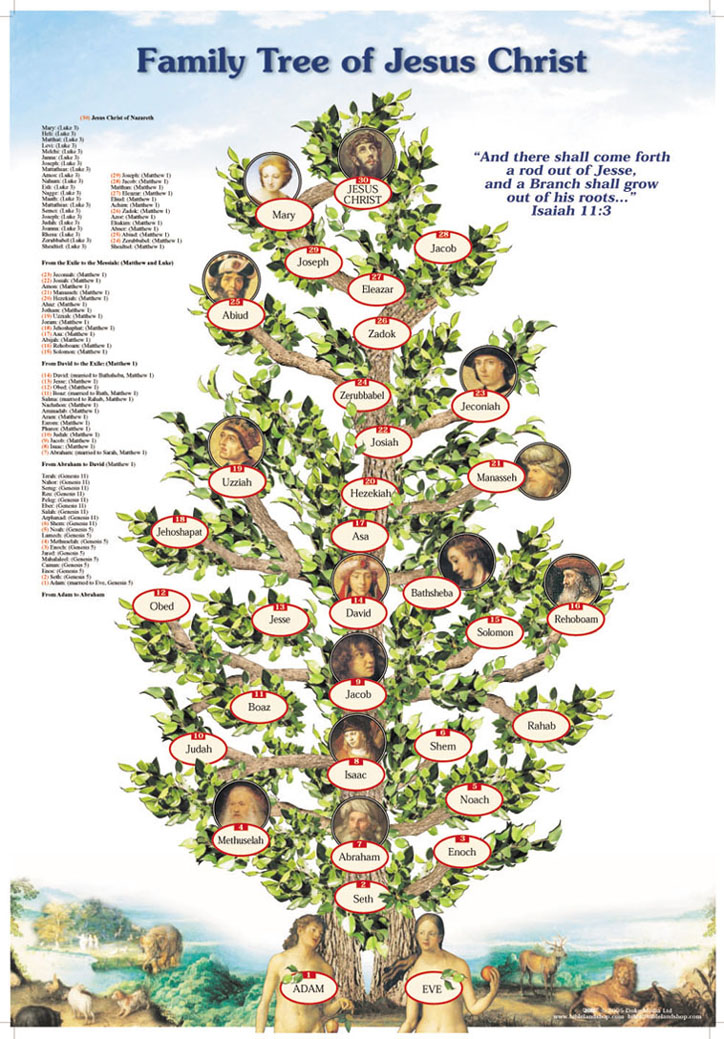 Genealogies are boring. Or at least they were boring. Just check all those names of him being the father of him who was the father of him and all along the line. Names you can hardly pronounce and personalities you don’t know and won’t know even if you did have a bible encyclopaedia handy. They were boring to me. I’d just skip past them to get to the interesting bit of the story.
Yet when I read them now – in and of themselves they form something rather fascinating. For among the many reasons why this genealogy is so important, it is through this that the Saviour of the world makes His appearance. When you consider that and look at some of the names and some of the implied historical incidents it refers to, it should encourage and challenge you that this our Saviour is a part of a family, part of people, part of the fabric of national and human history and that fabric is interwoven with the good, the bad and the ugly. Some all three can be seen in the same person.
Jesse the father of King David. David was the father of Solomon, whose mother had been Uriah’s wife, (Matthew 1:6)
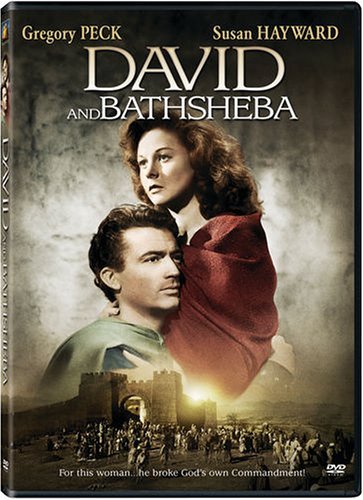 Take that reference to David. Right there you’ve got Jesus being in the line as the great king – Jesus as royalty comes from a royal lineage and so it’s no surprise that He should be seen as the next in line. And yet no sooner are we given that information then we are given the son of David through whom Jesus comes – that namely being Solomon and in a very revealing way we are told that his mother is Uriah’s wife. No name is mentioned, just the fact that Solomon’s Dad was involved in something at least ill-conceived before engaging with the woman that would be Solomon’s Mum. When we read the full story of how Solomon’s mother changed from Uriah’s wife to David’s wife (In 2 Samuel 11 and also chapter 12), we come across the bad and ugly element to a man who remained the standard for monarchy in Israel throughout its history. It is amazing to consider and ponder and it highlights once again both the grace of God as well as the underlying fact that the Messiah came out of a Mess.
Yet He still comes and as verse 21 would also assure us, He has come to save us from the mess – not just the mess, but our mess, my mess. I also noted carefully how in that verse it says His people – again indicating family, which is what the genealogy is all about. I understand that for Matthew’s purpose in establishing Jesus as the Messiah the message was to have resonance with God’s chosen people Israel. Yet this is not a closed letter – it’s not a gospel for the people of Israel only. Indeed the ultimate patriarch mentioned – Abraham himself was no Jew and as Paul would highlight Abraham is the father of the faithful (despite his own indiscretions that had seismic repercussions). Thus I am included in His people. Thus those who believe become a part of the family. Thus those who have messed up big time, are also saved from their sins because of Him who came out of the mess.
This is just a part of what I picked up in chapter one – there is so much more that can be said, but that’s the beauty of reading the Word. You read it, you read it again, you allow it to read you where you are, and see the connecting points and how Jesus is highlighted in it and where God is taking you through it and you share it as best you can – in word, in deed, in testimony, however, wherever, whenever.
I look forward to sharing more insights as the days go by.
For His Name’s Sake
Shalom
dmcd

 Life With CD