
 Christianity remains a very interesting faith. It’s an interesting faith because despite having one main character described in one main collection of works it still manages to arouse a multitude of reactions from those claiming to follow the main character. The one collection of volumes can be read and interpreted in such a variety of ways it is no surprise that people have used vitriolic words to disabuse anyone of the idea of disagreeing with their view on this tome.
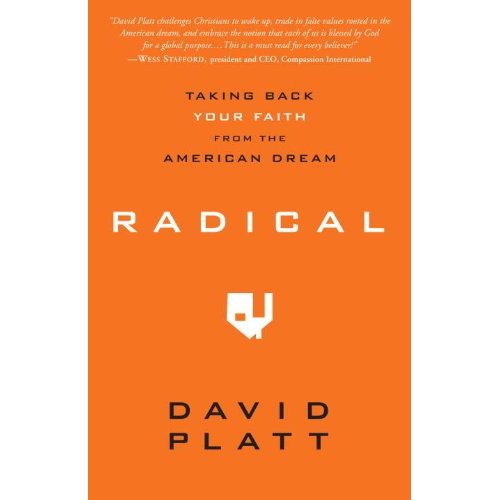
David Platt’s book Radical comes in at a good time for a significant element of mainstream Christianity and although the primary audience is American (after all it is about the American dream) those who choose to follow Jesus from any culture, especially those considered as Western capitalist countries will find similarities in the concerns Platt raises here.
A refreshing quality of the books is that Platt is not stating something as though it is fresh revelation. I’d like to think for quite a number of people who choose to read it the content will act as a wake-up call to the implications of following Christ. Even for those, however, who are familiar with the issues outlined, it should refresh and reinvigorate the need to live out those radical implications of faith.
 The challenges Platt sets out in his book bear some consideration – they are practical and have the seeds to be life changing to those who embrace the spirit in which they are offered. At the same time it is not a dictate – it is not an ultimatum as though this is the only way to really understand and follow Christ in this day and age. It is a stimulating challenge to do something beyond the comfortable norm in pursuing Jesus.
The work is by no means perfect and there are just as many questions to consider in terms of if Platt has gone far enough in considering the implications of being Christ-centred especially in the context of him leading a megachurch with mega-million dollars worth of facilities, etc. etc. There is also the question on the enabling, edifying and equipping environment in which these radical implications can be lived out – does it really work under a clergy-laity split maintained under the pastor-as-chief-executive model.
The fact that the book is incomplete is one of the endearing aspects of it – it is something that leads any reader back to the original and contentious individual source of this whole work. This is why I’d have no problems recommending this book for anyone interested in engaging with Jesus in these interesting times especially in countering the cultural claims that can subtly be assumed to be Christian.
For His Name’s Sake
Shalom
dmcd

 Life With CD