
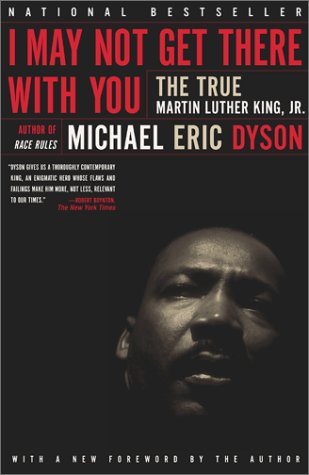
 There have been one or two blog posts especially in January that were inspired after reading sections of Michael Eric Dyson’s book I May Not Get There With You: The True Martin Luther King. A bit of personal context might help before getting into the review itself.
When I was in my early teens I had a thirst for reading (a thirst that has not been satiated over 20 years later). I started off with comic books, but soon went on to proper prose (i.e. no pictures) and moved from fiction to non-fiction. I remember at the time picking up and reading basic books on the civil rights struggle in America and one on Martin Luther King. My views on racial discrimination and ethnic identity were still at its early stages of development and I was not aware of the a lot of the issues involved. I do remember in my later teens as I studied politics at A-level and later on at degree I came across Dyson’s book and at least gave it a look even if I didn’t read it properly. So decades later when I came across the book at this season of my own personal development, it made sense to me to actually READ the book, rather than just taking it out of the library and letting gather dust and a significant library fine.
 It took a while to get into the book, not because it is hard to read, but because the momentum in the book doesn’t pick up immediately unless you devote a lot of your energies to it. Once that momentum is developed, however, and you are on the train of thought of the areas that Dyson explores then the read becomes one of the most stimulating and thought provoking you could ever hope to get in a reading experience outside the Bible.
The premise of Dyson’s book is that the real King is missing from the public consciousness and instead he has been replaced with a number of more amenable or desirable images of a man that doesn’t rock the boat or only wanted to bring about a world where black could live without fear of oppression or discrimination. This is a complex book despite it’s fairly straightforward structure, because it is depicting a complex man.
 Nine areas of the King persona and legacy are explored, but more than just a focus on King there is a desire to see how the underlying principles he stood for can be translated into the scene at the time of the writing of the book (roughly 2001). So it is not unusual for Dyson to be talking on a theme with no reference to King for pages. Dyson obviously loves King and feels the need to explore him warts and all not to establish a figure on a pedestal but to truly celebrate who was great essentially because of his commitment to racial and later social justice.
Dyson’s work is compelling because he doesn’t hold back in expressing his view of who the true King was. No one is left behind in his assault on the revisionist work that’s taken place with King. Blacks, whites, liberals, conservatives all coming for stinging criticism for failing to appreciate the whole man and what he stood for. The book reminds the reader how deeply unpopular King was throughout his career, but especially in his later years with his stand against the Vietnam War and inkling towards a model of America reflecting more social democratic values that remain almost unspeakable anathema for the majority of American political prevailing ideology.
 It also shows a King that changed his mind about the capacity of white people to genuinely sort out their own racism. The experiences in endeavouring to make a breakthrough in the North definitely shaped King’s views both on his own people and those who opposed him as more subtle and sophisticated techniques were used to keep the status quo of oppressed minorities. By that time it wasn’t just a case of the racial agenda for King, it had broadened to include the poor.
King is not sainted in this book or deified. His views on women is criticised by Dyson as is his sexual infidelity. Yet on the latter point, the writer would want to appeal to the reader to consider the historical context which motivated King’s actions – almost as though in as much as the act was wrong, when you consider the weight of responsibility and burden of the cause on his shoulder there is some sort of explanation for it. This area is well thought out and insistent, yet not convincing. Though Dyson rightly states that it shouldn’t be glorified to suggest King’s character is tarnished beyond repair, neither should it be hushed up from King sympathisers.
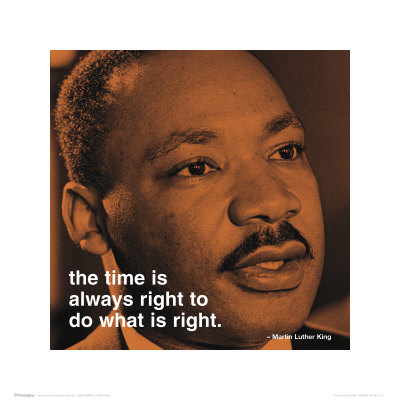 Indeed throughout the book, the author in stating his positions with clarity and authority treads the tricky tightrope of being a critical admirer and fan of the man and the mission that the man was on. I don’t come away with a fawning appreciation of Martin Luther King, but a sombre realisation that sometimes with the best will in the world the issues to take a stand on can be compromised and obscured by whichever agenda wants to hijack it for its own purposes and no better is that seen that in the legacy of King’s dream.
The book challenges the reader to take a stand themselves or at least be more committed to the issues it addresses. How important is racial identity in pursuing matters of justice and equality in society? Is it really the case that people and systems are already prejudiced and making an appeal to hearts is a relatively vain pursuit? Is it really an example of empathising with those you wish to serve if you live in the lap of luxury, or does you mission not necessitate living in absolute simplicity?
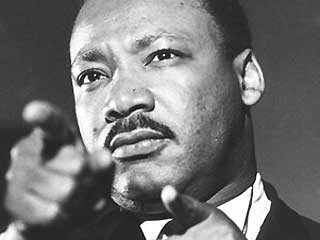 Relating a man of his time whose efforts have gone on way beyond him Dyson is not looking to write a specifically Christian book, and it is readable to those who have an interest in human affairs, personalities, politics, history, culture, sociology and the fascinating world of determining one’s own purpose and the cost it takes.
It is far more than a biography and for that Dyson is to be congratulated. I heartily recommend reading the book and grappling with your own concept of what is right and how that should be fought for against the prevailing odds.
For His Name’s Sake
Shalom
dmcd

 Life With CD