
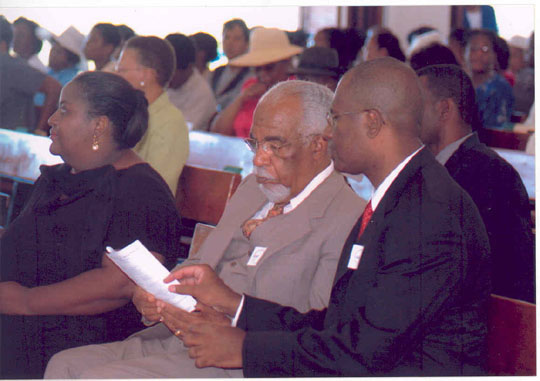
 Coming from a Sabbath-keeping church tradition and then seeing things from a different perspective, it’s sometimes shameful seeing some of the conduct that we maintain in that tradition.
One of them that’s particularly shameful is on a typical Sabbath service at the end of the morning study and the moderator/superintendent looks to give a welcome to visitors. There’s something about the greeting that can highlight just how much of an oddity a visitor is in the place. It’s bad enough not being a part of the church furniture, but then to have the spotlight shone on you in what is meant to be a welcoming fashion but actually can be slightly cringe-worthy defeats the whole point of the welcome.
 Especially when in introducing ourselves and who we are we make a big deal out of something that Jesus Christ Himself never placed as the centrality of our faith. Look Sabbath, is important, that’s a given. It’s a creation thing, it’s a law thing, it’s a Jesus-thing and it was an early church thing, so there’s no dispute about it, yet Jesus did not die on the cross for people to make a big deal of it. Especially to the embarrassing point of it becoming a deal-breaker with visitors.
It really goes against the heart of a real welcome and made to feel at home even if you’re not a member of the church or a part of the furniture. What I noticed growing up in a predominantly black church (majority Jamaican) is that the whole Sabbath thing contributes to the marginalised, separate mentality and it’s very hard to penetrate that with so many hoops to jump to be acceptable. It’s not even something that has to be defended that much when you look not only at the make-up of the church in terms of the demographic breakdown, but also look at what is actively done in it to address the apparent contradiction of that with an early church ethos and salvation point of reconciliation breaking down those barriers.
 The combination of cultural heritage and doctrinal exclusivity really concocts a situation not helpful complimentary with a gracious, open-hearted compassionate approach that looks to engage with our wider world in conversation seasoned with grace suitable for our situation and impacting people with the life-changing love of Jesus.
I hear so many horror stories of people popping into a service and made to feel really odd and separate with intrusive questions of doctrinal importance like ‘do you keep the Sabbath?’, and ‘what church do you come from?’, literally as if these are aliens from outer space and when the wrong answer is given some condescending remark is made about needing to learn the truth. As if you’d want to learn the truth from someone so patronising and unfriendly.
The tragedy of it is that when we compare it to the example of Jesus and His welcome of people our approach really misses the mark of meeting people where they are at and engaging with them there with the gospel. Can you imagine if Jesus sinners in a similar fashion? No story about the woman on the well. No story of the paraplegic having his sins forgiven. No story of the woman caught in adultery and about to be stoned and then told that if no one condemns her than she is free to go on and sin no more. None of these kind of episodes in His ministry.
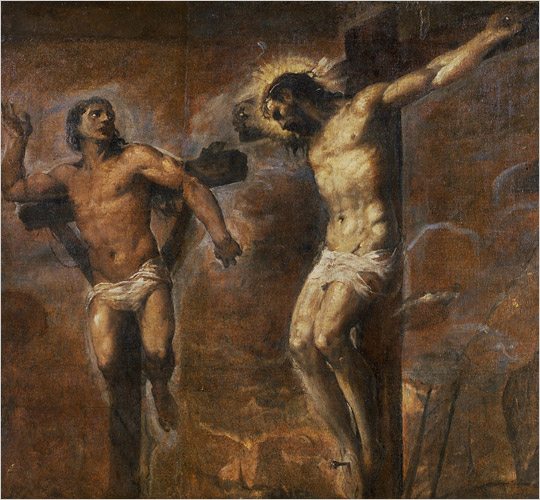 As for what happens on the cross with the man who finally recognises that this man has done no wrong, would Jesus say something as outrageous as this day you’ll be with me in paradise? I don’t think so, rather he’d have to rebuke the man for breaking whatever law and got him nailed beside him in the first place.
It’s fair to say the whole book is summed up in the concept love and that love is as much about actively engaging in someone else to connect them back to God who is love. That love compels us to be concerned about the other’s welfare in an effort to show the brilliance of God. As a result less time (as in no time) will be spent battering people with a sense of inferiority because they haven’t ticked all the correct doctrinal boxes (or don’t fit the cultural requirements).
More time will be spent just like Jesus incarnating the word of God for others to see what the distinctive love of God looks, smells, sounds, tastes and feels like. They can see the wonder of how this treasure is put in the jars of clay and the wonder of it all is how they can have a relationship with God likewise and experience life in all its fullness and real freedom.
For His Name’s Sake
Shalom
dmcd

 Life With CD